Tea Gardening 101: A DIY Guide to Growing, Harvesting, and Brewing Herbal Tea
Gardening has always called to me. There’s an intuitive, grounding solace in the pressing of hands into the soil, an unspoken dialogue with the rhythm of the earth.
When I bought my home, The Inkwell—an old soul of a place tucked among fruit trees and flowers, humming with pollinators—I inherited more than a garden. I stepped into a living, breathing permaculture ecosystem that had been lovingly designed to feed both body and spirit.
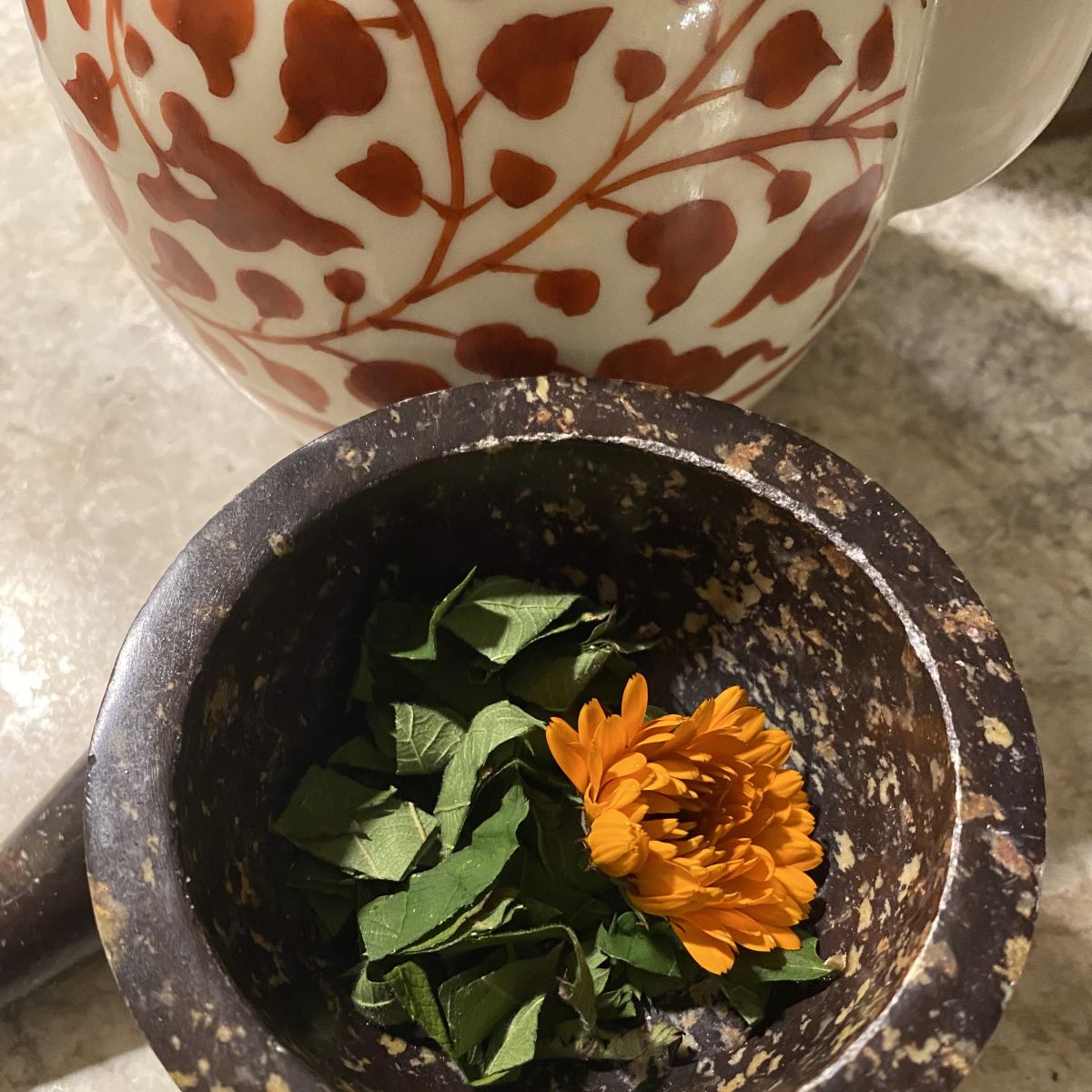
At first, I just did my best to keep up with it all: pruning, weeding, learning what grew where. But it was one crisp fall afternoon that everything changed. I came in from a long, satisfying day of tending to the garden—dirt under my fingernails, cheeks rosy from the wind—and reached for a warm cup of tea. As the fragrant steam swirled from my cup to warm my nose, I realized that every ingredient I was steeping—lemon balm, calendula, rose hip—was something I’d just walked past outside.
The epiphany struck: I’d been tending a tea garden all along, without even realizing it.
This guide is for anyone who wants to cultivate that same grounded serenity. Whether you have a full backyard or just a few pots on a sunny balcony, you can grow, harvest, and brew your own herbal teas.
Let’s begin where all the best cups of tea start: in the garden.
Tea Basics
Here’s a little secret that feels like a revelation when you first hear it:
All true tea—green, white, oolong, black—comes from the same plant.
Camellia sinensis, an evergreen shrub with delicate, glossy leaves, is the mother of them all. It’s not different types of plants that make different teas, but what happens after the leaves are picked. It’s in the processing—how the leaves are withered, rolled, oxidized, and dried—that each tea earns its unique character.
-
- White tea is the gentlest—young buds simply dried in the sun.
-
- Green tea skips oxidation to keep its grassy, vegetal brightness.
-
- Oolong gets a partial oxidation, curling toward floral and fruity notes.
-
- Black tea is fully oxidized, making it go bold and robust, perfect for rainy mornings and thoughtful afternoons.
All tea made from the Camellia sinensis plant contains caffeine, though not always in the way you might expect. White tea, often assumed to be the mildest, can actually contain more caffeine than green tea, depending on how it is harvested (young buds tend to have higher concentrations). Black tea is generally the most caffeinated and can vary depending on brewing time and water temperature when steeped.
Any type of tea is not going to reach half the caffeine content of coffee, but unlike coffee, the caffeine in tea is accompanied by L-theanine, an amino acid that promotes calm and focus to balance the sipping experience.
For the scientifically inclined, it’s easy to tumble down a rabbit hole exploring the nuanced chemistry behind tea flavors, influenced by the timing and methods in its process: withering, rolling, oxidizing, and drying. Catechins, theaflavins, and peroxidase, anyone? Suffice it to say when we steep these leaves, we are tasting not just the plant, but a method, a synthesis, a process of of transformation.
What about Herbal Tea?
But then—what about peppermint tea? Chamomile? Lemon balm or lavender?
These don’t come from Camellia sinensis at all.
They are called tisanes (pronounced tee-zahn), a French word for infusions made from herbs, flowers, roots, and spices. Technically speaking, they aren’t “tea,” but they’ve been welcomed to the table just the same.
Tisanes can be as complex as a blend of leaves, berries, flowers, and roots, or as unadorned as a single plant steeped in hot water. Appropriately, a tea made from one single ingredient is called a simple. A sprig of fresh thyme. A handful of dried rose petals. A few crushed fennel seeds.
If you are new to the world of homegrown tea, I invite you to start your journey with an exploration of simples. Experience each in turn, mindfully, taking in not only the scent and taste but how each element makes you feel. In the moment, and the way in which it carries you onward with your day. As you sip, read a bit about the properties of that element—both practical, and the whispered folk traditions that infuse it. Establishing that intimate relationship with each plant in your tea garden will inform your decisions as you get creative and experiment with your own blends.
There are endless combinations to explore, and no wrong answers—just your senses, your desires, and your curiosity guiding the cup.
Choosing Plants: Leaves, Flowers, Fruits, and Roots
Whether brewing a simple or beginning to experiment with blends, it is easiest to start with plants you already have or can easily sample—whether it’s an untended wild trail or a cutting from a kind neighbor.
You may see some plants listed in the curated guide below that entice and inspire you to carefully and gradually select and add to your garden. Don’t overwhelm yourself; the practice of tea gardening is meant to be meditative and restorative.
Each category invites you to explore its unique flavors, aromas, and qualities — from the bright freshness of greens to the soothing comfort of roots, the delicate allure of florals, the vibrant zing of fruits, and the warm depth of spices. Use this list as inspiration to cultivate your own personal tea sanctuary, one leaf, flower, and spice at a time.
Greens
Mints
- Chocolate mint
- Orange mint
- Peppermint
- Spearmint
Berry Leaves
- Blackberry leaf
- Raspberry leaf
- Strawberry leaf
Other Greens / Leaves
- Catnip
- Dandelion leaves
- Nettle
- Sweet woodruff
Citrusy / Lemon-Scented Herbs
- Lemon balm
- Lemon thyme
- Lemon verbena
- Lemongrass
Florals
- Calendula
- Chamomile
- Dandelion flower
- Elderflower
- Hibiscus
- Hop blossom
- Lavender
- Linden flower
- Rose
Fruits & Berries
- Blackberries
- Blueberries
- Citrus peels (grapefruit peel, lemon peel, lime peel, orange peel)
- Cranberries
- Elderberries
- Juniper berries
- Raspberries
- Rose hips
Roots
- Dandelion root
- Ginger
- Licorice root
- Valerian root
Sweeteners & Aromatics
- Anise hyssop
- Holy basil
- Licorice fern root
- Stevia
Spices
- Allspice berries
- Cardamom pods or seeds
- Cinnamon bark
- Cloves
- Coriander seeds
- Fennel seeds
- Nutmeg
- Star anise
- Szechuan peppercorns
- Vanilla bean or vanilla pods (technically a fruit pod but considered a spice in flavoring)
Designing Your Garden Space
Take a moment to envision the kind of space you want to create. Is it a tucked-away nook devoted to grounding and serenity? A cheery, sunlit stretch along a fence? Designing your tea garden isn’t just about where the plants go—it’s about shaping a space that speaks to you, too.
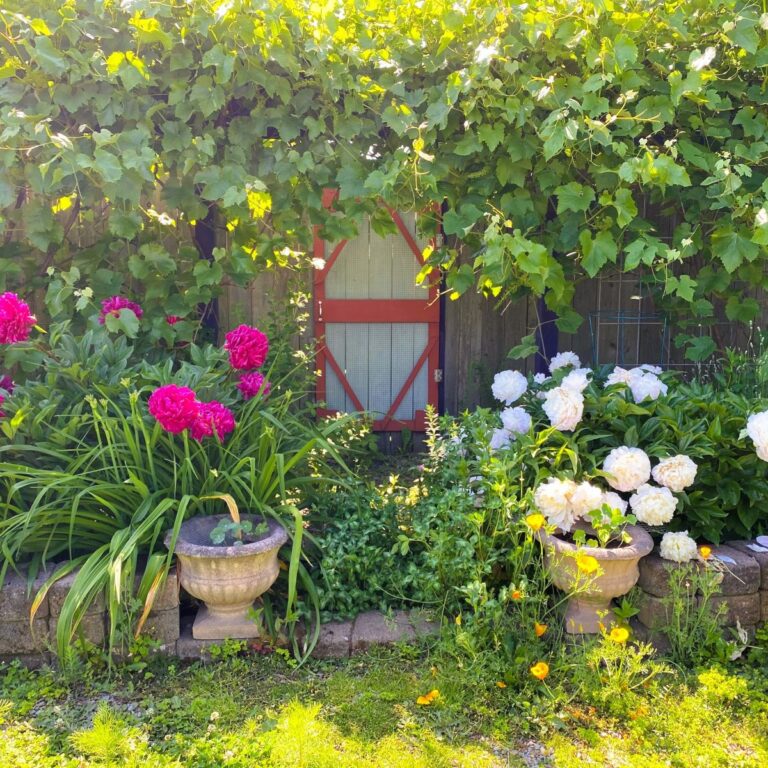
And you don’t need to dedicate one physical space. The plants I use in my tea blends are scattered throughout my front and backyards. Some are tucked behind a grapevine trellis, others mingling among cottage garden flowers, even a few that appear unbidden, naturalized beneath the trees in my little backyard orchard. I like having them spread out like this. It invites me to take a meandering stroll through the whole garden, breathing in the scents, noticing who is blooming today, pausing with gratitude as I go.
As you plan, take note of where the light falls throughout the day. Some tea herbs thrive in full sun, while others appreciate a bit of dappled shade in the afternoon heat. Observe how the soil drains after a good rain, and whether it could use a little love—compost, mulch, or amendments to loosen heavy clay or enrich sandy soil.
I like this handy unassuming little soil tester tool for keeping tabs on sunlight, moisture, and pH all at once.
Take a step back and consider function and structure. Filling a large space with nothing but plants can make it tricky to get in and around them, especially come harvest time. Keep mulched paths or stepping stones to break up the space and ensure easy access to each plant.
I also highly recommend inviting beneficial wildlife into your sanctuary. For me, a consistently filled bird feeder is non-negotiable—the morning chorus of birdsong is an essential part of my daily rhythm. The wild birds happily return the favor by pollinating plants and scattering seeds.
Consider the bees, too. They are essential to our ecosystem. A well-placed bee hotel and a few of their favorite blooms will draw in the adorable fuzzy bumblebutts, contentedly sipping from blossoms and carrying pollen from plant to plant.
And don’t forget your own comfort. If you can, add a small bench or a flat rock to rest on. My garden is dotted with old stumps to provide natural perches to set down tools or give your body a moment’s pause.
Harvesting and Storing Your Herbs
For the most potent flavor and therapeutic benefits, timing matters. In general, herbs should be harvested just before the plant begins to flower—when their essential oils are at their peak. For most flower-based teas like lavender, pick when the buds are swollen and on the verge of bloom. Chamomile, however, should be harvested while in full bloom.
The ideal time of day is morning, after the dew has dried but before the heat of the day sets in. This is when the plants are most vibrant and full of aromatic compounds.
In all my gardening, I like to pay attention to the moon cycles, planting under a waxing moon and harvesting under a waning moon. If the timing works in your favor, you may consider following the old folk traditions to infuse a deeper connection to the earth and its cycles into your practice.
Technique
Go for the youngest, most tender leaves. They not only offer the best flavor, but pinching off young growth also encourages your plants to grow back more robustly. Harvest conservatively—just what you need—unless the plant could benefit from a deeper pruning. And as a general rule, never take more than one-third of the plant at a time to keep it healthy and producing.
Drying
Before we talk about drying, it is important to note that fresh is best: the best herbal tea flavor is achieved from steeping fresh plants. Sip what’s in season while harvesting to fill your stores to sustain you in your mindful tea ritual all year long.
There are a few ways to dry your herbs, but for the richest flavor, dry them gently: whole leaves, still on the stem, and always out of direct sunlight. Good airflow is key. You can tie small bundles and hang them upside down, or spread them out on a screen or mesh rack in a well-ventilated area. A food dehydrator can also work well, just be sure to use the lowest heat setting.
Storage
I can’t emphasize this enough: your herbs must be completely bone dry before sealing them in an airtight container. Even a trace of moisture can lead to mold and ruin your entire batch. When dried properly, herbs should feel crisp and crumble easily between your fingers.
Any airtight container will do, but I prefer ones that block out light to protect the herbs’ flavor and potency. These amber glass jars are my favorite—they’re practical, and look lovely lined up beside my teapots.
Brewing
It couldn’t be more simple. If you can boil water and tell time, you can brew an amazing pot of herbal tea. Tuck your ingredients into a teapot, add hot water, and let them steep. Then strain and sip to your heart’s content. Aim for 5 or 6 fresh leaves, or a tablespoon dried, per serving.
Homegrown herbal tea benefits from a longer steep than conventional tea bags—typically 5 to 10 minutes for most ingredients. This process is wonderfully forgiving and can be adjusted by intuition, but as a general guide: the more delicate the ingredient and the smaller the surface area, the shorter the steep. Crushed dried leaves will require less time than whole fresh ones.
Aim for:
- 5–7 minutes for tender flower petals
- 7–10 minutes for leafy herbs
- Up to 20 minutes for roots or dense botanicals
Let your senses guide you. The beauty of this process is that you can enjoy the first mild sips while the rest continues to infuse, deepening the flavor for your next pour.
Blend Suggestions
If you’re just starting out, as I mentioned earlier I strongly recommend you begin by exploring simples. Let each plant sing its own melody before inviting it to harmonize in a blend.
A gentle disclaimer: I am but a humble gardener; not a trained herbalist. Plants are potent beings, carrying unique and sometimes powerful properties that interact with the human body in meaningful ways—beneficial or otherwise. After all, many modern pharmaceuticals are synthetic derivations of these very plants we grow. Do your homework, listen to your body, and consult with a professional if you’re ever unsure.
If you’re looking to deepen your understanding, a few trusted books can help build your foundation. I recommend keeping something like The Herbal Apothecary nearby for practical insights. And if your inner green witch whispers to you, you might find delight in blending that knowledge with the folklore found in Cunningham’s Encyclopedia of Magical Herbs. For example, chamomile is known for its antifungal, anti-inflammatory, and sedative properties—but it is also said to attract money and counteract curses and spells.
Have fun experimenting with the harmonizing of ingredients and write your own symphony. Try pairing a floral and a mint in equal measure. Draw 10% of a more bitter or medicinal plant like dandelion leaf into a sweet base like anise hyssop. Add a dash of citrus peel to brighten a fundamental base like chamomile. You can always sweeten more earthy blends with a spoonful of honey or a splash of cream.
Your recipes are uniquely yours. It’s most rewarding to stumble upon blends that uniquely speak to you. Let your senses lead the way and trust the process of discovering what blend meets you where you are.
Your Garden Speaks Your Language
What grows in your garden is a language all its own, shaped by your care and your touch. Your tea garden becomes more than just plants—it becomes a sanctuary of the soul, a refuge that reflects who you are.
Whether your tea garden is little more than a cluster of pots on your windowsill or a flourishing permaculture haven, may this guide be your companion in planting with intention, harvesting with care, and brewing with reverence.
Love,
Karin (with an eye)
If you haven’t already, I invite you to read Brewing Calm: How to Start a Mindful Tea Practice (With What You Already Have). It offers simple, grounding steps for creating your own tea ritual—a gentle place to begin if you’re seeking calm in the everyday.
To help you along the way, I’ve created a free printable: the Beginner’s Tea Ritual Checklist. It’s filled with starter tips and thoughtful prompts to shape your own quiet, centering tea practice.
Join the Evergreen Inkwell newsletter, and I’ll send it straight to your inbox. You’ll also receive seasonal inspiration, gardening notes, and tender little poems to sip alongside your cup.
What's Next: Upcoming Posts to Grow Your Garden
Like this article? Watch this space for upcoming posts on:
- Home Grown Herbal Tea Recipes
- Simple Tea Rituals for Daily Living
- A Tea Garden for Every Space: From Windowsill to Balcony
- Herbal Magic: What Your Tea Garden Plants Symbolize
Just a heads up: Some links in this post may be affiliate links. If you click and make a purchase, I might earn a small commission—at no extra cost to you. Thanks for supporting The Evergreen Inkwell!