Rootbound: On Breathing Room, Boundaries, and Growing Past the Edges
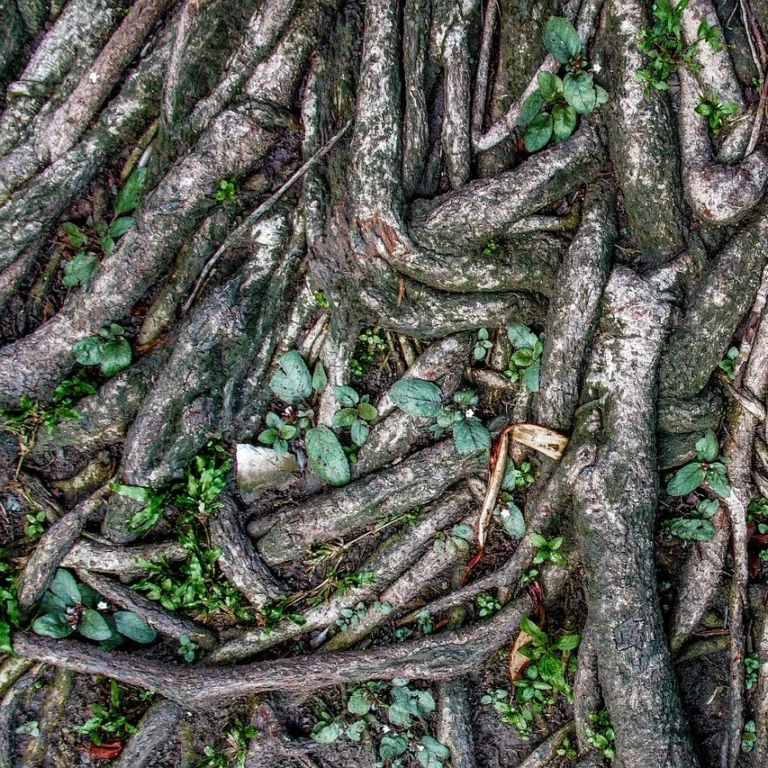
Some things look fine until you try to move them—and find they’ve been clinging to their edges for far too long.
It starts subtly: a pot that dries too fast, a leaf that yellows without reason. On the surface, the plant might look fine. But tip it over, and you’ll find the tangle beneath—a rootbound plant that’s outgrown its pot, circling inward, wrapping tighter and tighter around itself. Water can’t absorb properly. Nutrients don’t reach the leaves. The plant becomes stressed.
When you’re buying a plant—especially a perennial, herb, or potted vegetable start—take a moment to peek at the bottom of the container. Are roots poking out through the drainage holes? Is the plant unusually dry despite recent watering? These can be early signs it’s already rootbound.
Pro tip: Gently tap the plant out of its pot (yes, even at the nursery—most staff are used to this). If the root ball is dense and you can’t see any soil, you’ve got a rootbound start on your hands.
That doesn’t mean it’s a lost cause. Some plants can recover beautifully with a bit of care. But the longer it stays like that—knotted, dry, constricted—the harder it becomes to bounce back. Left too long, they can strangle themselves. Not for lack of love—but for lack of space.
How to Help a Rootbound Plant
Some plants respond to repotting with relief. Others sulk for a while before they adjust. A few—especially if left rootbound for too long—never quite recover. That doesn’t mean you’ve failed them. It just means timing matters.
If you catch it early, all it might take is a gentle loosening with your fingers. Let the roots stretch outward a little before you place them in fresh soil. Think of it like a soft reminder: you’re safe now—you can grow again.
In more advanced cases, where the roots are tightly matted into a thick coil, you may need to be more assertive. Score the root ball vertically with a knife or pruners—just shallow slits along the surface to interrupt the spiraling. You might even trim off the outermost layer. It feels harsh, but for many plants, this small trauma is what reawakens growth.
Water well after repotting, and give it time. Even resilient plants benefit from a few days out of direct sun while they adjust. And if you’re planting into the ground, don’t skip this step—just because there’s space doesn’t mean the roots will know how to use it.
Some plants, especially those with delicate taproots (like poppies or carrots), don’t like root disturbance and should be direct-sown or handled with extreme care. But most nursery starts—herbs, tomatoes, perennials, even many shrubs—will benefit from this little intervention.
And Then There’s Us
Have you ever tapped a start out of its pot, dismayed to find that massive tangle of roots, and felt a familiar twinge of empathy? There’s a reason it resonates so deeply—we humans can get rootbound too.
Sometimes we finally give ourselves the space we’ve been longing for—less on the schedule, fewer demands, the freedom to move or make or rest—and still feel stuck. Like nothing’s happening. Like maybe we were never meant to grow in the first place.
But it’s not always the soil. Sometimes it’s that we’ve been bound so long, we forgot how to reach.
We push through tight spaces for too long. We overstay in roles, routines, obligations. Even good things—creative projects, caregiving, community—can start to feel like too much when we haven’t left ourselves room to breathe. We tangle ourselves around expectations until we forget where our roots even begin.
There’s a concept in psychology called learned helplessness—when someone becomes so used to restriction that, even once the door is open, they no longer try to escape. I think about that a lot when I repot a plant that’s been rootbound too long. Despite the fresh soil and space, the roots sometimes keep circling inward. Their memory of confinement is stronger than the promise of freedom.
I’ve felt that. I’m learning that part of tending myself well means checking the pot I’m growing in—not just the schedule, the output, or the goals, but the shape I’ve built around them. Sometimes the best thing I can do—for my work, creativity, or relationships—is gently loosen the roots. Shake off what’s no longer serving. Give myself permission to replant.
This isn’t always comfortable. Repotting a plant means disturbing the root ball. It’s messy. It might look worse before it looks better. But done thoughtfully, it’s the only way to thrive again.
And here’s something I come back to again and again: you are the best person to know when it’s time. No one else can decide your boundaries for you. No one else knows how tight it’s gotten inside your chest. If it feels like there’s not enough air, not enough softness, not enough time to just be—you don’t need permission to make more room.
I struggle with claustrophobia both literally and metaphorically, so maybe this hits a little deeper for me. Even in the novel I’m working on, the idea of being trapped, unable to move, desperate for air—physically, psychologically—keeps surfacing. I’m beginning to think it’s not just a theme. It’s a truth I’m learning to write my way through.
Sometimes the hardest part of healing is not the repotting—it’s believing you deserve the bigger container.
You Are Not Too Much
You are not demanding for needing space.
You are not lazy for slowing down.
You are not selfish for wanting air to breathe.
No one else gets to define the shape of your container.
You are allowed to outgrow things.
You are allowed to choose again.
You are allowed to take up more space.
May you feel when it’s time to loosen the roots.
May you trust your hands to do it.
May you stretch toward the light, with no apology.
Love,
Karin (with an eye)