Olive's Quieting: A Hen’s Final Days and the Lessons She Left Behind
Olive’s Quieting
When I moved into the Inkwell in March of 2024, a trio of residents of the chicken coop out back ‘came with the house.’ Becoming a chicken tender was not on my bingo card that year, but I suppose it made sense for this new chapter of my life. I had no idea how much personality, sweetness, and joy chickens can bring—or that I would fall in love. Two of the three were already beyond their egg-laying years, but they all belonged here, integral to the garden and its shifting seasons. They busied themselves each day turning the soil, enjoying scraps from the kitchen, keeping the bugs and pests in balance, happily composting away.
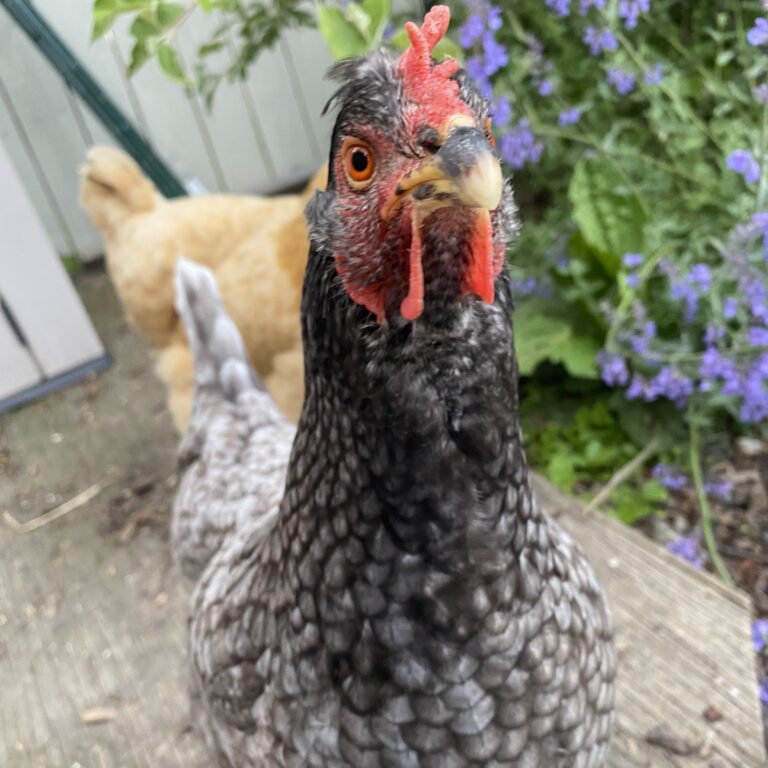
Olive quickly revealed herself as the gracious leader of the flock, the one who carried presence and poise alongside curiosity and mischief. She had an important position in the flock’s hierarchy, and found a similar fixed place in my heart.
It took time for the flock to warm to me, to accept being held. But over the months, Olive allowed me close, and in recent weeks, she leaned into it. We shared quiet snuggles; I would sway with her in my arms, singing softly.
As chickens age, they often go through a gradual quieting. The body slows, muscles weaken, balance falters, appetite fades, and breathing grows shallower. Steps shorten, and energy shifts from doing to simply being. In these final days, a hen seeks safety, comfort, and familiar voices, allowing herself to rest in the presence of those she trusts.
Watching Olive in this quieting was a kind of vigil. My role was to be present, to make the space safe, peaceful, and loving. She was assured that it was okay to retire from her daily life and responsibilities. In that quiet, I—and the rest of the flock—were reassured too: she was okay, and we would be too.
The most curious and the most friendly, Olive was often the first to test a boundary. More than once she figured out how to sneak into the fenced garden beds and helped herself to tender greens, undoing entire crops in an afternoon. She loved pressing herself against the back sliding glass door, as though the thin pane might finally let her into the world she sensed on the other side. If the door was left open even a moment too long, she sometimes succeeded in taking a few tentative steps into the house, eager to explore the mysteries within.
When I came outside with treats, Olive was the first to appear, tearing across the yard in a half-flight run, wings spread clumsily side to side, materializing as if out of nowhere, and the rest of the flock would come running in her wake. With Olive, it often felt like playing the children’s game red light, green light—I’d walk out toward the shed and, when I turned, she would be right at my heels, head cocked, eyes bright.
She had the sweetest, most distinctive happy trill. I learned each of my hens’ voices over time, but Olive’s was the sound of contentment itself—a happy song I would echo back to her. She’d tilt her head in that birdlike way, listening to my clumsy imitation, as if amused that I was trying to meet her in her own language.
This autumn, I noticed her slowing. She had grown light, almost weightless in my hands. Still, she came for treats, though I suspect she had stopped eating her feed. On October 1, she did not come running. I found her in the nesting box, quiet and still. She was no longer able to navigate the ramp and lacked the balance she needed to roost on the perch. Over the next two days, she seemed to move more inward: standing in place for long stretches, breathing unevenly, her balance unsteady. Yet she stayed near, even dozing against me while I held her best friend Camilla in my lap, as if to share in the comfort by proxy.
On October 3, when she emerged from the orchard for treats I found her using her wings to keep balance as she struggled to walk. She napped in my lap for hours again that day, her body frail and weak. I carried her to bed that night, gently settling her in the nesting box she had chosen. By the next day, the morning of October 4, I could see her strength had nearly gone. She spent the morning not leaving the nesting box. She would not eat or drink. Her eyes were wild at first, frightened, but when I lifted her into my lap, cleaned up her beak and smoothed her feathers, she sighed deeply, as if relieved, and began to rest. For hours we stayed together just like that, my hand stroking her feathers, my prayers and reassurances whispered over her. The others passed by now and then, pausing to check on us, their leader quieting at last.
As light shifted into the late afternoon, something in me knew to move her into the sunlight. She opened her eyes to look at me once more, as if to reassure me or herself or both, then closed them again. I stood with her swaddled in my arms, the sun warming her feathers, and there she chose to let go. She breathed her last in the light, her spirit slipping free as I rocked her. I wept, holding her empty body, then laid her down tenderly while I dug her resting place in the very spot where we had shared her final hours.
The flock feels unmoored without her. When I bring out treats now, they drift toward me from scattered corners of the garden, no longer arriving as one. But Olive’s presence lingers—her trill, her mischief, her courage in leading the way.
Lessons from Olive and the Flock
Olive’s legacy has left an indelible mark on my heart, and her lessons are woven into a few of my recent blog posts.
Olive taught me that boundaries matter. Her bold foray into the newly planted spring vegetable garden was a lesson in the value of failure—the baseline from which all growth springs. I reflected on it in Failing Successfully. Missteps and setbacks are not the end of the story, but the beginning—they are how we learn to tend more wisely.
Her curiosity and mischief—sneaking into the garden beds, pressing against the sliding glass door—were never reckless; they were gentle experiments in possibility. She tested limits, reminding me of the joy in exploration, and the patience required to guide without stifling. As I wrote in The Gardener and the Garden Within, that lesson echoed the lavender she once uprooted was a tangible example of what fences are for: not punishment, but protection, a way of loving both the plant and the flock.
She also showed me the power of presence. Even as her body weakened, Olive’s quiet attentiveness—the way she lingered near while I held Camilla, or came for treats in her own careful way—taught me that being present can be a gift far greater than action. There is a poetry in noticing, a grace in simply being. It recalls what I shared in You Are Enough: that tending sometimes means stepping back, letting growth unfold without force, and trusting that rest, observation, and gentle attention are work enough.
Through her trill and the gentle exchanges we shared, Olive reminded me that communication is not just about words or deeds, but about listening, responding, and honoring connection in all its forms. There is a sweetness in small rituals—sharing a song, echoing a voice, or sitting together in quiet—that teaches patience and empathy, lessons the flock carries forward in subtle ways.
Finally, her quieting was a masterclass in trust and release. She showed me how to honor a life and a spirit, providing comfort without pressure, reassurance without interference. As she let go in the sunlight, I understood that care is not always about prolonging life, but about easing passage, creating space for dignity and peace. The flock and I were witnesses, and in witnessing, we learned acceptance, courage, and the gentle work of letting love be enough.
Olive’s life—and her final quieting—reminds me that even in small creatures, there is leadership, personality, and profound wisdom. She leaves behind not just absence, but lessons that ripple through the garden, the flock, and the heart.
May she rest in the sunlight she loved, her spirit free.
Love,
Karin (with an eye)