Why the Pursuit of Happiness Fails: Chasing Euphoria
We’re not chasing comfort. We’re chasing the return—the breath that follows pain, the flashpoint of aliveness. Maybe happiness was never the point at all.
The Elusive Promise of Happiness
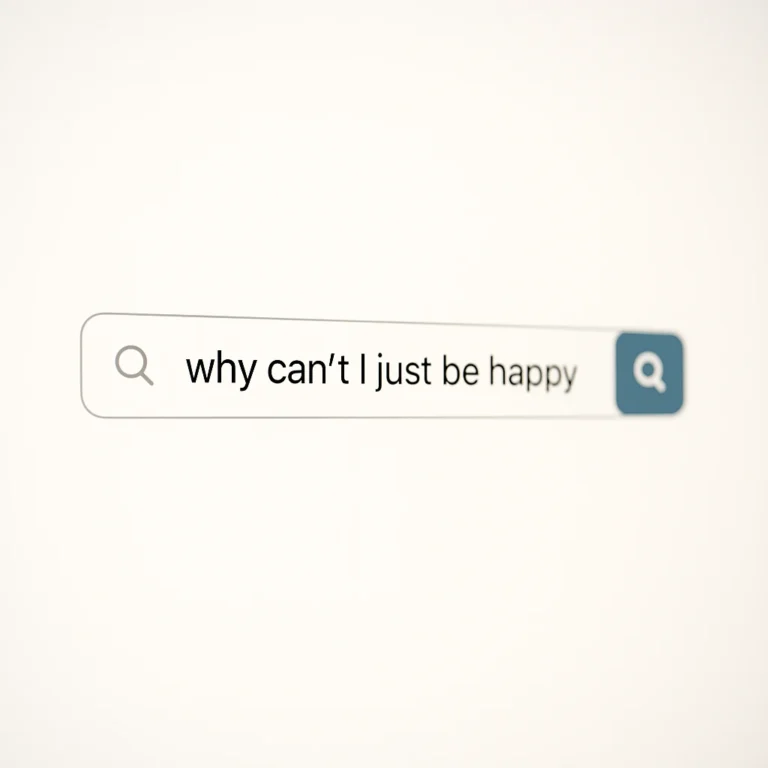
“Why can’t I just be happy?”
It’s a question I’ve asked myself, too. Not once, but again and again. The longing for happiness is natural. We talk about chasing happiness like it’s a place. A soft landing, a warm bed. The light left on for us.
But happiness is a moving target.
Why Dopamine Leaves Us Wanting
We chase fleeting dopamine highs we think will fix the ache, the emptiness, the restlessness. But the hedonic treadmill is all too quick to catch up. As humans we habituate to our circumstances. We adapt. When we experience something positive, our expectations and desires rise to meet it. There is no permanent happiness gain.
Hedonic Adaptation
Hedonic adaptation has been studied for decades, most notably by Philip Brickman and Donald T. Campbell in their groundbreaking 1971 article, “Hedonic Relativism and Planning the Good Society.” They theorized that people keep a fairly stable baseline level of happiness, or sadness, despite the ebbs and flows of life’s events and circumstances. You get a raise, and it feels great. You celebrate the achievement, you spend the “extra” cash from your first paycheck on something fun. And then you update your household budget with the extra wiggle room you’ve gained. It’s just a matter of time before that increased pay is simply your new normal.
Chasing Euphoria
We chase euphoria, thinking it will make us happy. The seductive allure of the dopamine hit. More money. More love. More success. And we’re left feeling empty, because nothing in our universe exists without its opposite. We don’t feel pleasure without the pain to contrast it.
So perhaps the question of our elusive happiness is not so much flawed, but misdirected.
Euphoria isn’t happiness.
We say that we seek happiness, but I don’t think that’s what we’re really chasing. Not when we push our bodies, hearts, minds to the edge of what we can bear. We chase that exquisite moment of relief—the after. The sharp inhale that comes after suffering lets go of us. The rush of blood when numb fingers start to thaw. Euphoria not as pleasure, but as contrast. Not comfort itself, but the echo of discomfort leaving the body.
It’s subtle, but it changes everything.
We Don’t Seek Comfort—We Seek Relief
Think of a cold shower after a hard run. You’ve earned that pain. Your breath catches, your body protests, but underneath it all is a clean, startling aliveness. A return. Or walking in from a storm, soaked and half-frozen, and stepping near a fire. The heat hurts at first. It tingles. It aches. And then it washes over you with something that feels close to grace.
That’s the high. That’s the feeling we keep chasing in different forms—because it’s earned. It doesn’t come from stillness. It doesn’t come from safety. It comes from tension unwinding. From effort expended. From getting through.
Are We Addicted to Pain—or to Rescue?
Which raises the question: are we addicted to the pain—or to the feeling of being rescued from it?
Pleasure isn’t always pure. Orgasm has a tension-release rhythm. So does crying. So does laughing (when it’s real). The body builds something up, then lets it go. Opioids hijack this process, offering relief without the climb. That’s part of what makes them so dangerous—and so devastatingly seductive. They shortcut the system. They replicate the reward, but strip out the struggle.
But in their rawest, truest form, these euphoric states point toward something deeply human: the need to feel. Not just to feel good, but to feel everything. The edge. The breaking point. The return. Maybe that’s where we brush against the universe—cracked open, alive to the pulse of being, reminded that we belong to something both vast and intimate.
What Are We Really Running From?
Maybe that’s why we run until our lungs burn, or plunge into icy lakes, or stand barefoot in the wet grass at dawn. Why we fast. Why we whisper truths that make our hearts race. Why we stretch silence to its breaking point in conversations that matter. Maybe we’re not chasing comfort at all—but the moment after. The inhale. The clarity. The flood of awareness when the discomfort finally lets go—and we don’t. It makes us remember that we are alive, and small, and burning with the briefness of it all.
So no, we’re not broken for wanting more. We’re just fiercely, achingly, beautifully human. And maybe we’ve been asking the wrong question.
Not “Why can’t I be happy?”
But: “What am I chasing, and what am I running from?”
Because when you ask that, something shifts.
You realize happiness was never the goal.
Choose Aliveness
Euphoria isn’t the destination—it’s the flashpoint. The exhale. The signal that you’ve endured. That you felt something. That you’re still here.
And what we’re really seeking, in all of this, might not be comfort at all—but presence. Aliveness. Belonging. A felt sense of being in the moment, not above it.
Aliveness isn’t constant bloom. It’s rootedness. It’s trusting the cycle in total. Embracing not only the growth and the harvest but also the quiet months—the frost, the turning under. Choosing aliveness means honoring the seasons of dormancy as much as the burst of growth. It’s knowing there’s still life underground when everything on the surface looks still or stripped bare. The bleakness of winter is a reminder that contrasts and elevates the euphoria of spring blossoms. A garden doesn’t panic when winter comes. It doesn’t mourn the petals that fall. It lets go. It rests. It returns.You’re allowed to stop chasing.
You’re allowed to rest.
You’re allowed to stop running—
not because you’ve arrived at happiness,
but because you remembered you were already alive.
Love, Karin (with an eye)
If you’re struggling with the weight of these questions, you’re not alone. Support is always available—text HOME to 741741 for free, confidential help 24/7.