You Are Enough: A Gardener’s Guide to Grace
The Question Beneath the Surface
There’s a quiet question that haunts many of us:
Why do I feel like I’m always failing?
It shadows us through our days, shaping how we see ourselves and quietly judging what we’ve done. But the question misses something essential.
We only feel like we’re failing because of the impossibly long measuring stick we’ve been conditioned to hold up to ourselves. To free yourself from that sense of consistently falling short, you don’t need to try harder, push beyond your limits, or find more hours in the day. Instead, perhaps it’s time to re-evaluate the standard itself.
You are enough.
The Garden as Teacher
Time spent in the garden teaches you the value of grace. Offer yourself that same grace. Let the process matter more than the outcome. Choose ease over perfection. Show up with what you have, forgive yourself when things aren’t tidy, and trust that growth unfolds even when it’s not obvious.
I’ve stood inside the kind of garden that takes your breath away—where every stone rests with intention, where pine trees lean just so, where silence feels curated. Japanese gardens do that. So does Butchart Gardens in British Columbia, all swooping borders and manicured elegance. I wander through those places in profound awe, thinking: this is astonishing… and completely unattainable for me.
Not because I don’t love gardening. I do. But I also have a full-time job. A writing side quest. A body that tires. And a life that happens. A lot.
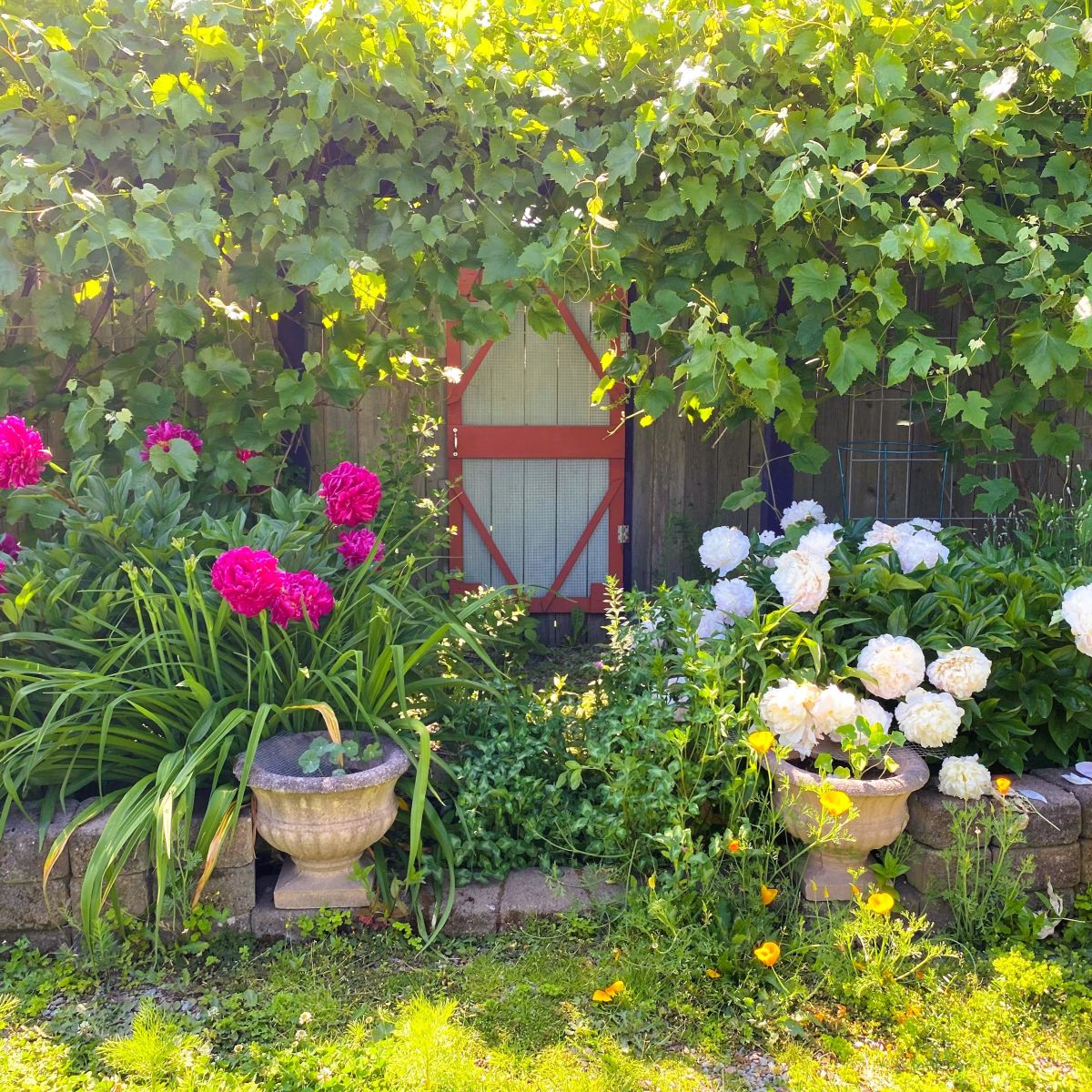
So I’ve made peace with a different kind of garden. One that breathes with me. One that forgives my absences. One that offers beauty even when I don’t think I’ve quite earned it.
She Grows Anyway
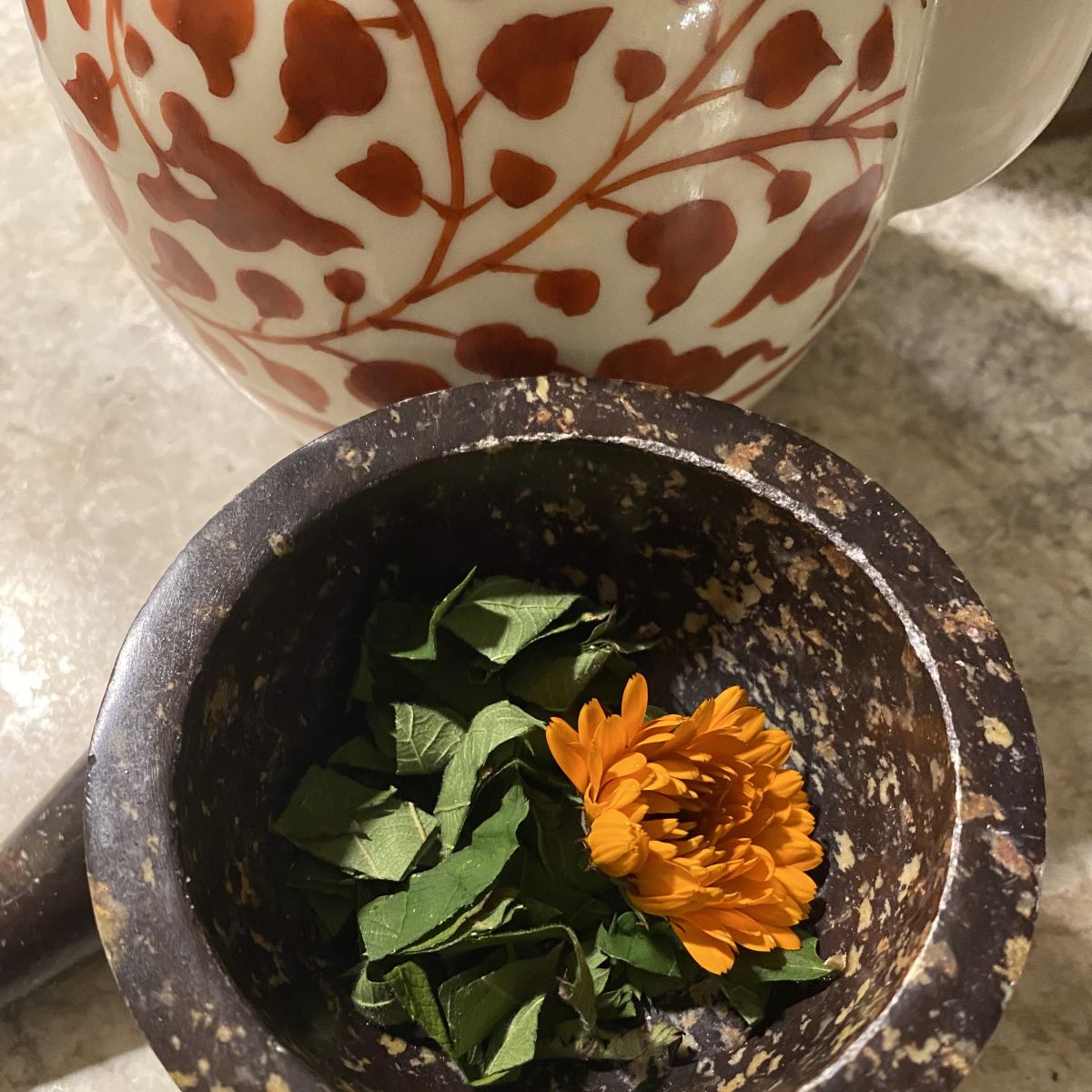
I think of her—the garden, the spirit of this place—as a kind and generous presence. She doesn’t scold. She doesn’t keep a ledger. Sometimes I forget to water. Some weekends I lose the thread completely. And yet she meets me where I am—with a rogue hollyhock that shoots seven feet into the sky after lying low last year, with bearded irises I thought were choked beyond salvage blooming in wild violet defiance, with calendula flickering gold like sunlight skipping playfully across the surface of a pond.
She gives so much back. All she asks is that I show up.
There’s a simple rule I keep: I give the garden at least one thing a day. Sometimes, that’s a single weed pulled on the way to taking out the trash. Other times, it’s a long afternoon with my hands in the dirt, sun on my back, music playing from a portable speaker tucked into my garden tote. Most days, it’s something in between—a few snips, a little wandering, making small adjustments, a quiet moment noticing what’s changed.
I don’t make a list. I don’t try to get it all done. I just go out, listen, and respond in kind.
Not a To-Do List, But a Conversation
I call it “dicking around,” affectionately. Not because I’m wasting time, but because I’m not marching out there with a clipboard. I let the garden tell me what it needs. A rose leaning too far into the path. A patch of comfrey showing a cast of powdery mildew. An assertive brigade of lemon balm muscling too far into the daylilies. A bed that feels thirsty. A corner that wants attention.
There are so many tasks in life that are never really done. Gardening is one of them. And maybe that’s the point.
There was a time I tried to stay on top of every weed like it was a battle. But now?
There are some invasive weeds I pull on sight with an audible gasp of offense—thistle, mostly. But others, I’ve made peace with. Willowherb. Nipplewort. I’ve a particular fondness for Toadflax, with its proud spindles and sparks of purple like slow motion fireworks. I’ll even use them to fill out a bouquet. Dandelions get a pass, at least for a while. I let all of these be for the most part because they’re easy to pull when needed—and because something has to fill the space. Nature abhors a vacuum. And honestly, so do I.
Letting go isn’t giving up. It’s noticing what’s working and letting it.
Let the Wild Things Work It Out
The other day I found a spot where my lemon balm and asters had collided—two bossy plants in a botanical turf war. I laughed out loud.
Perfect, I thought. You two duke it out. Fill the space. Spare me the effort.
Not everything needs me to intervene. Sometimes the best choice is to step back and let them figure it out among themselves. There’s a strange relief in letting the garden manage itself for a minute.
When Life Pulls You Away
Sometimes life pulls you away like a riptide into a chaotic sea.
It happened to me last year—a surprise week spent in the hospital.
No warning. No contingency plan. Just gone.
And when I returned, she welcomed me back without grudge or scorn—
not with restraint, but with abundance.
It was May, where the spring showers were just giving way to the longer days of saturated sunshine. That week after the cherry blossoms have finished littering the reaching dew-filled cups of leaves and nitrogen ignites full bore, sending tendrils of green sprawling forth so quickly you can almost hear their stretching limbs reaching for the skies.
I walked the garden as if touring it for the first time. In a way, I was. So much had happened while I was away—blooms I hadn’t known were quietly preparing had made their debut: bearded iris, rhododendron, Jerusalem star, lupine, fuchsia, roses. Even the vegetables I had started were managing to make their way, despite the missed waterings.
The sudden overgrowth offered a little extra shade to the tender bleeding hearts that spilled their arches gracefully into the pathways, welcoming me home with their belated valentines.
A Sacred Exchange
That time spent in the garden—the wandering, the small gestures, the so-called dicking around—isn’t haphazard or chaotic, though unstructured. It’s a sacred exchange of love. You give to the garden in presence. In attention. In quiet affection.
And the garden gives back—not just beauty and nourishment, but also a kind of deepening. A more saturated perception of the world around you. A reminder to savor each blossom, each shift in light, each breath of air fragrant with green. To remember that we are alive for only a blip in time. And that it is a treasure.
Let That Be Enough
I’m learning to give what I can and let that be enough.
I’m learning that I don’t have to be all things to all people—in the garden or in life.
It’s okay to let some things go. To let others fill the space. To allow some wildness at the edges.
I delight in the plants that show up uninvited. I thank the ones that surprise me.
I’m not trying to finish. I’m trying to stay present.
I believe the garden forgives me.
I believe she blooms not in spite of my imperfections, but because of the relationship we’ve built—me showing up when I can, and her meeting me where I’m at with grace.
And in that, she reminds me: you are enough.
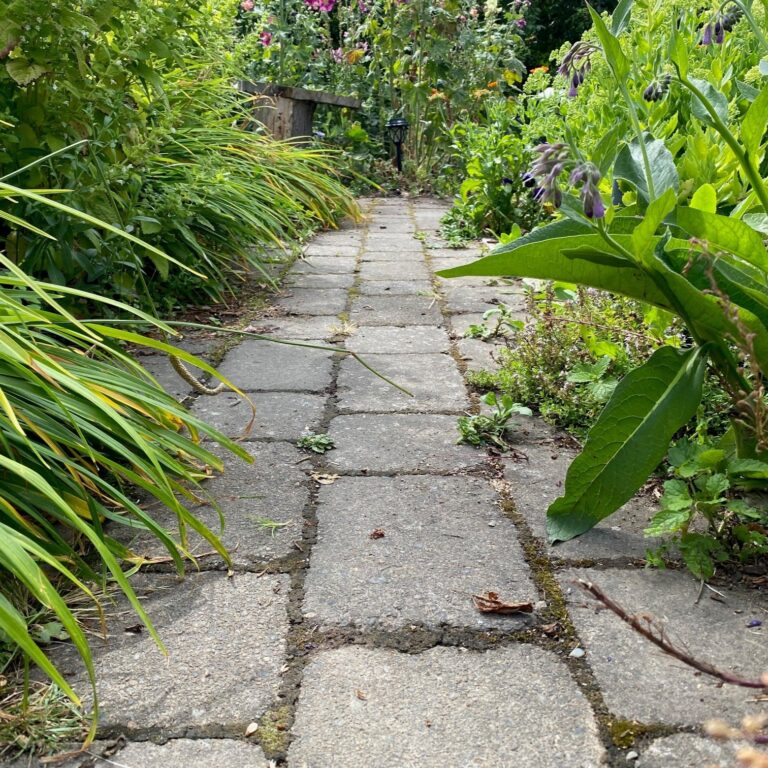
So no, I don’t deadhead every rose. I let the hips form, offering bright orange pops of color through the dull of winter. They’re delicious in tea, and a perfect little zing of vitamin C in the depths of grey when you need it most. The little bits of moss, purslane, and oregano popping up between stones in the pathway add softness and character.
I don’t tear up every weed. I let a little chaos in. I don’t keep everything in check.
And still, she grows.
Still, she returns.
Still, she surprises me with her joy, her generosity, and her forgiveness.
The Garden Loves You Back
Letting go is not walking away, but loosening your grip. Trusting the process. Making space for a little wildness. And letting her love you back.
—
Love,
Karin (with an eye)
If this resonated with you, you might also enjoy my “Gardening is Editing” post, where I explore the power of letting go from another angle.